Is Saka Platformed Correctly?
Saka is too good to be a touchline winger. The sprint and creation data, the Wigan and Everton evidence, and the case for Saka centrally behind an Ødegaard–Rice–Bruno midfield.
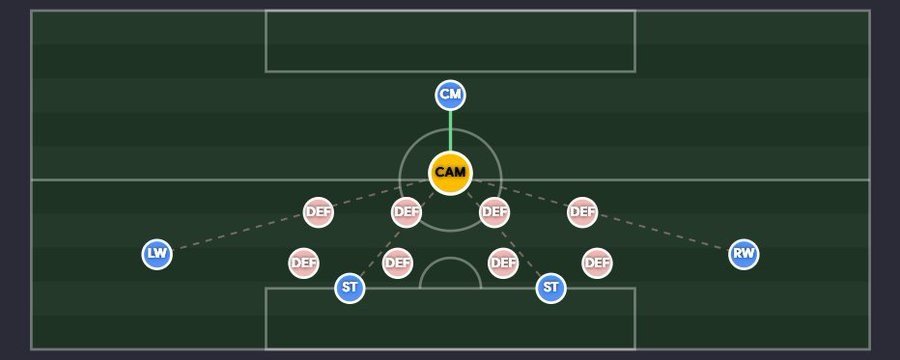
For a while now Bukayo Saka has been carrying the Arsenal team. The team is seemingly built around the English forward, with various tactical nuances created just for him. To mention a few: the inversion of Timber into the final third in an attempt to reduce 2v1s, and the overlapping Ben White.
So what’s the problem? He’s scoring for Arsenal and is finding himself in the company of some of the PL greats. It’s not quite that simple for me. I can argue that Ben White’s injuries have caught up to him; it’s almost upsetting to see the defender not being able to run as intensely to create overloads and dynamic full-back play. The Timber experiment doesn’t quite work. Yes, he’s able to provide numbers, but as shown vs Brighton, when the opposition is touch-tight and rigid out of possession, Saka is relegated to the touchline to create.
My submission is that Saka is too good to be a touchline winger.
What the data says
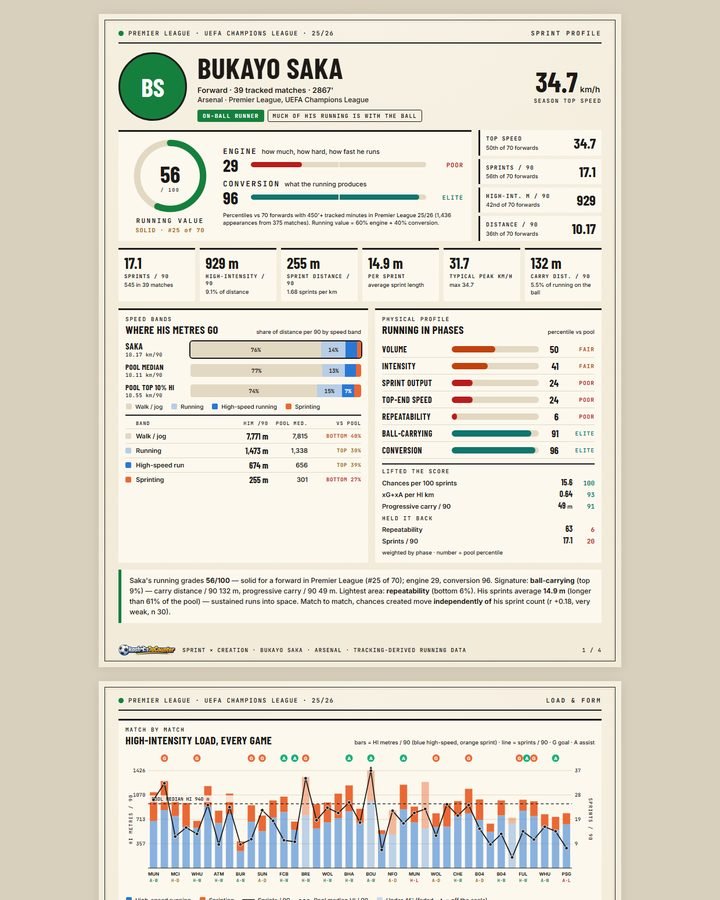
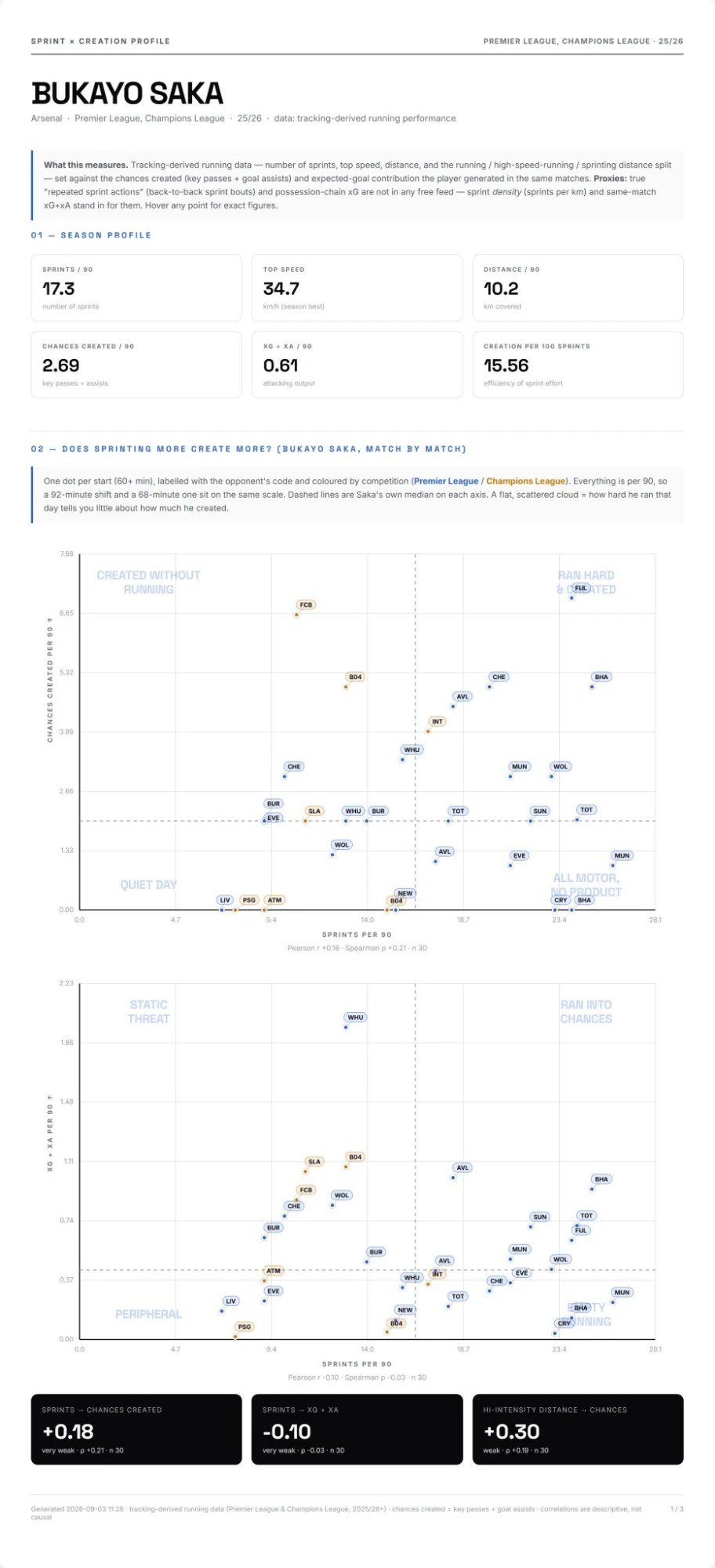 How hard did Saka run last year? The teams that he ran the hardest against are all shown above.
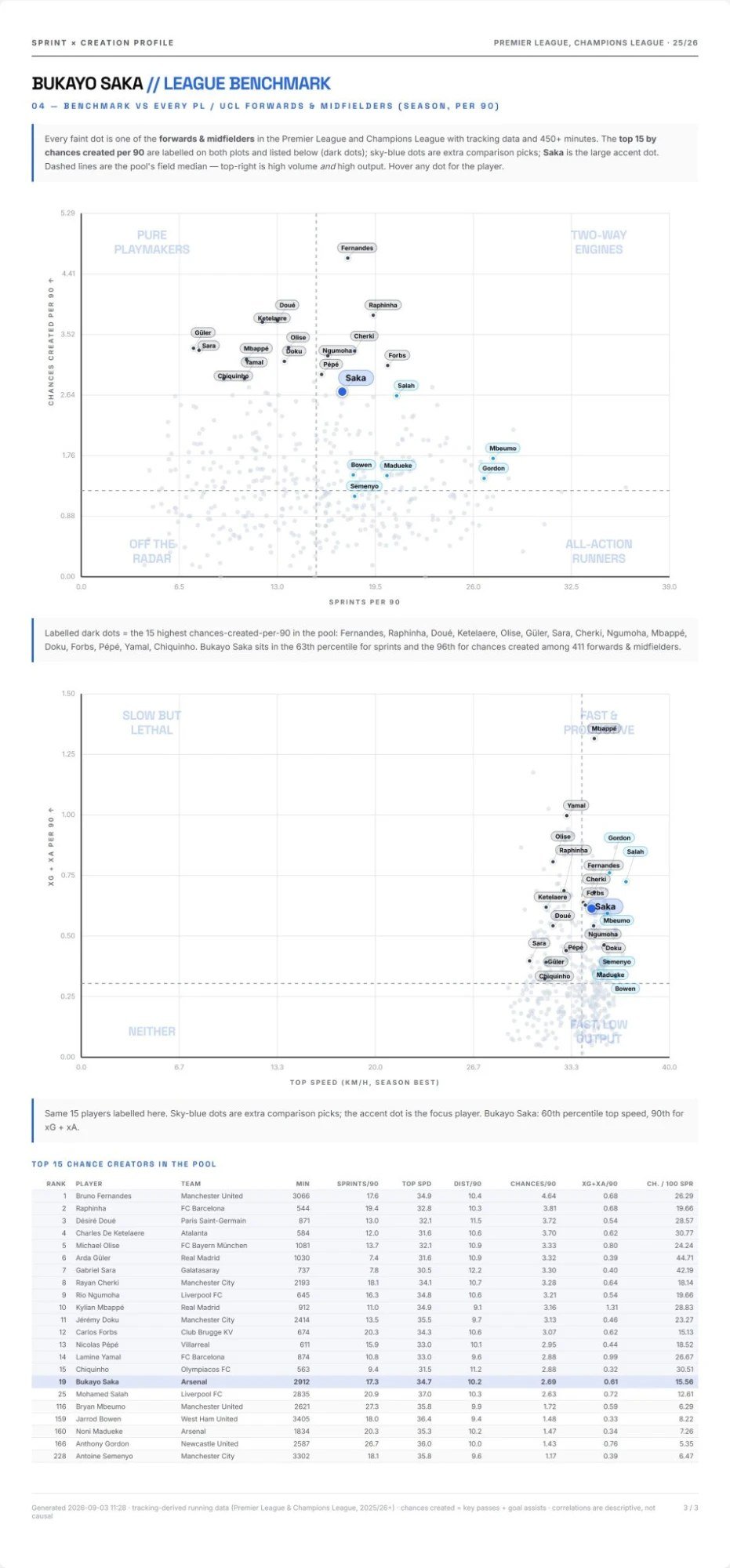 Good creativity output despite injuries, and his top speed compared to other pacey wingers: you can see he’s in good company still.
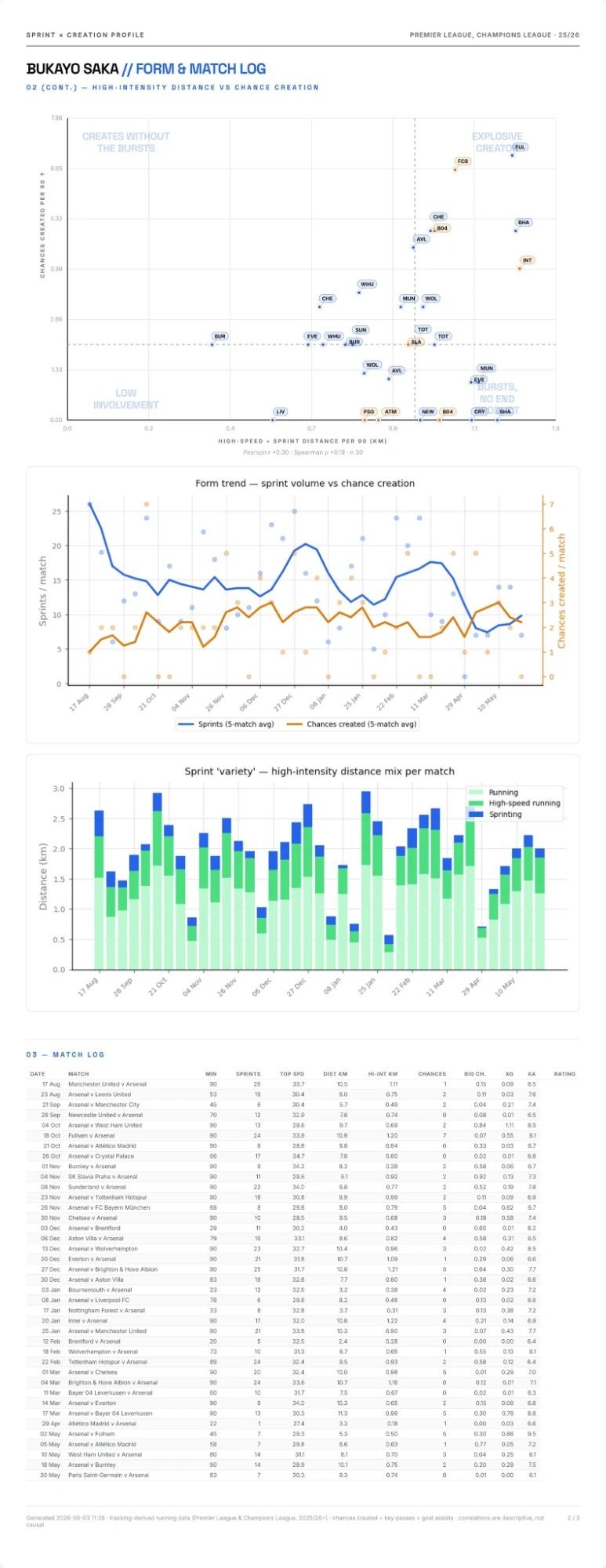 The form chart shows that at the end of the season the output did drop ever so slightly. The intensity too, and the correlation is the injuries.
The main reasoning behind all of these stats is to show that the player still has repeat sprintability and intensity to couple with his creativity. It is clear to me the player has the ability to power through. Now the idea is: let’s utilise these tendencies down the middle, where he can be more effective.
Let’s appreciate his wing play and his stats: even in an injury-ridden campaign he was close to the best creators in the league, i.e. Cherki etc. But being good at a job doesn’t mean it’s the right job. Ronaldo was a phenomenal winger before he became a phenomenal striker. Sometimes the position that gets the best numbers isn’t the position that gets the best version of the player.
So here’s my pitch: Saka centrally, in a front line with licence to roam between the lines and the box, and a midfield three behind him built to actually service that role: Ødegaard (or Merino when rotated) at LCM, Rice as the CM, and Bruno Guimarães at RCM.
Why the touchline is wasting him
Watch Saka’s best moments this season and count how many of them start from a standing position hugging the white line, isolated 1v1 against a full-back who’s had 90 minutes to reset his body shape. Now count how many come from him drifting inside, receiving on the half-turn, with three or four options in front of him. It’s not close. The touchline version of Saka needs the ball played to feet in space to be dangerous. The half-space version of Saka is dangerous just by existing there, because he drags a full-back’s and a centre-back’s attention at once.
The Timber inversion was Arteta’s patch for this: get an extra body into midfield so Saka isn’t the only one making things happen in the final third. But patches are patches. Vs Brighton it broke down exactly how you’d script it: rigid low block, no space in behind for Timber’s inverting to punish, and suddenly Saka’s back to isolation on the touchline with White (already carrying miles he doesn’t have anymore) as his only real outlet. You’re solving a central problem with a wide-area fix.
Why this midfield three specifically
Rice as the single pivot isn’t new; he’s shown he can be the destroyer and the guy who plays the first line-breaking pass. What’s new is freeing him from also being the emergency box-to-box runner covering for an advancing full-back. With Bruno Guimarães on the right of the three, you get someone who can actually do the carrying and late arrivals into the box that Rice has been doing on fumes for two seasons. Bruno at Newcastle wasn’t just an engine; he was a guy who could receive under pressure in tight central areas and still turn it into something progressive. That’s exactly the profile you want next to a front-central Saka, because it means Saka doesn’t have to drop 20 yards to help build.
Ødegaard on the left of the three (or Merino when Ødegaard needs managing) gives you the disguised passer who can find Saka between the lines without telegraphing it. This is the crucial bit: Ødegaard and Saka already have a relationship built on years of one-touch combinations in tight spaces. Push Saka central and that partnership doesn’t disappear; it just moves 15 yards infield, where it’s actually harder to defend.
The evidence is already there
And this isn’t just theory. Arteta has already shown his hand. Remember the FA Cup win over Wigan: Calafiori went down in the warm-up, Arteta needed a reshuffle, and instead of a like-for-like swap he pushed Saka into the No. 8 role centrally. Arsenal were 4-0 up inside half an hour. Afterwards Arteta explained exactly why it worked: play Saka centrally and the opponent loses their fixed reference point on him, he can interchange with the wide players at will, and his ability to find pockets of space lets him do damage on the ball in areas he never usually touches. That’s not me theorising; that’s the manager himself confirming the point.
You saw glimpses of it again vs Everton in March. Officially Saka started that day on the right of the front three, wide as always. But watch what happened once Everton set up in their low block: Saka stopped waiting on the touchline for it to open up and started drifting inside, getting himself into the width of the six-yard box to attack crosses and knockdowns like an out-and-out central forward. The header chance he had that day didn’t come from a wide position; it came from him abandoning the wing entirely to find the space centrally.
Two different games, two different triggers (an injury reshuffle, a stubborn low block), same conclusion: whenever the shackles come off and Saka’s allowed inside, the team’s ceiling goes up with him.
What it actually fixes
- Saka gets combinations instead of isolation. A full-back alone against him becomes a full-back and a centre-back and a pivot all having to make a decision.
- Rice stops being asked to be both a 6 and an 8 every single match.
- The reliance on an overlapping full-back to manufacture Saka’s touches disappears, which matters a lot given the White injury history I have already flagged.
- You get genuine goal threat from Saka rather than just service: central forwards get shots from the 12-yard box, wingers get shots from 25 yards at an angle.
The counter is obvious: doesn’t this just become “Saka as a 9” and lose his creativity? I don’t think so, not with this midfield behind him. A front six of Ødegaard–Rice–Bruno plus Saka centrally isn’t asking Saka to be a poacher; it’s asking him to be the free 8 in a 3-2-4-1 shape where the front four rotate constantly. He still drops, still combines, still creates. He just isn’t chained to a touchline to do it.